From salaried person to self-employed physiotherapist: is it really the solution?
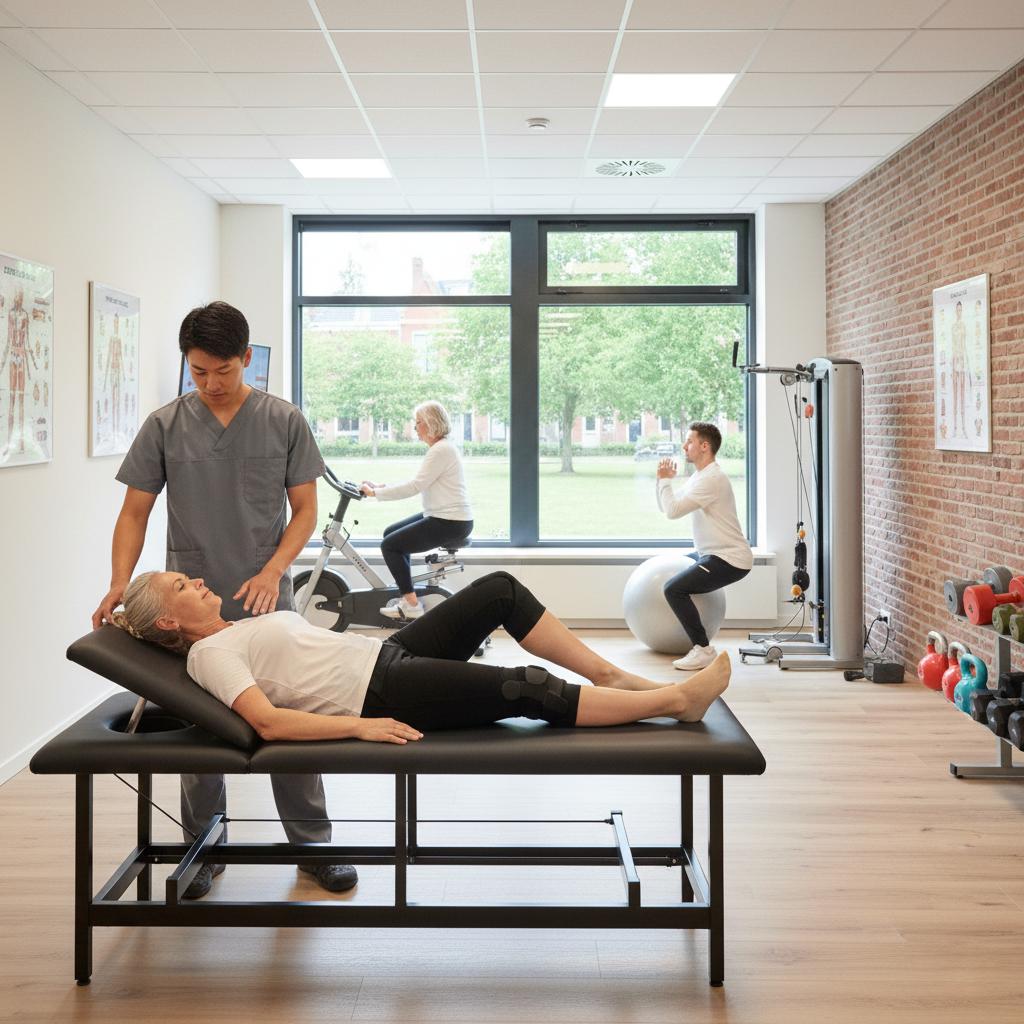
You see them everywhere: vacancies for self-employed physiotherapists with tempting hourly rates. 45 to 70 euro per hour. Sounds great, right?
But is that also true? Before you take the plunge, it pays to think carefully about what really lies behind those numbers.
Why physios consider freelancers
The motivation is understandable. As an employee, you earn between 3,500 and 4,300 euro gross per month. In addition, primary physical therapy does not yet have a full-fledged collective labor agreement. You negotiate salary and conditions yourself.
For many physiotherapists, ZZP is therefore a logical consideration: setting your own rate, working flexibly and controlling your own agenda. That freedom appeals.
The reality of a self-employed person: pros and cons
That 60 euro per hour sounds appealing. But it's important to see the full picture.
The benefits of being self-employed
There are certainly advantages and: ZZP has its charm. In principle, you decide who you work with, when you work and at what rate. You can choose the practices and patients that suit you. That freedom is valuable. For entrepreneurial physios who like to be at the helm themselves, ZZP can be an excellent choice. You build your own network, develop entrepreneurial skills and have more autonomy over how you work.
The costs that come with it
However, it is important to realize: there are still several costs associated with that hourly rate. You register with the Chamber of Commerce, you are obliged to join the pension fund and arrange various insurances. Professional liability insurance is necessary, and a disability insurance costs quickly 300 to 500 euros per month for physios.
There are also costs for an accountant, mandatory (additional) training and various registrations. These are all investments in your company, but they must come from your turnover.
What does ZZP ask of you?
In addition to the financial side, ZZP also asks something of you as a person. You are responsible for your own acquisition, administration and planning. No work means no income. You pay for holidays and sick days yourself.
The DBA Act and discussions about false self-employment also require attention. Practice holders have become more cautious, which affects how assignments are offered.
At the same time: around 1,300 physiotherapists in the Netherlands are successfully working as freelancers. It can certainly work, provided you are well prepared and know what to get yourself into.
A fair comparison: salaried employment vs self-employed
Let's put the numbers side by side. Suppose you work as a self-employed person for 60 euro per hour and work 32 treatment hours per week.
As a self-employed person
Your turnover is 32 hours x 60 euro = 1,920 euro per week, or 7,680 euro gross per month. Sounds appealing.
After deducting taxes and contributions (30-40%, around 2,300 to 3,000 euros), pension accrual (400 euro), insurances such as AOV and professional liability (300 to 500 euro), bookkeeper and administration (150 euro), and training and registrations (150 euro), 3,500 to 4,300 euro net remains.
In addition, you work more hours than just those 32 treatment hours. Acquisition, administration and planning also take time. And you build up reserves for vacation and unforeseen circumstances.
Salaried as a physio in the Netherlands
With a gross salary of between 3,500 and 4,300 euros per month, your net income is approximately 2,600 to 3,100 euros. In addition, you get vacation pay, security in case of illness, pension accrual and 25 vacation days. The big advantage: you fully focus on your profession, without administrative worries.
So the difference with a self-employed person is certainly there, but smaller than often thought. The choice mainly depends on what you are looking for: entrepreneurial freedom or job security.
And then there is a third option
What if you want the best of both worlds? The security of employment, but with a salary that really feels like an upgrade?
In Switzerland, as a physiotherapist, you earn between 5,500 and 6,000 euros gross per month as a starter, and with experience between 6,500 and 7,500 euros. On top of that, another 13th month comes at the end of the year.
The special thing: you have a lot more net left than in the Netherlands. Your net income is two to three times higher. And that with all the benefits of employment: vacation days, continued payment in case of illness and pension accrual. Many physical therapists save 1,500 to 2,000 euros a month, without the stress of entrepreneurship.
What suits you?
The question is not so much whether ZZP is good or bad. The question is: what is right for you?
- Choose ZZP as you are entrepreneurial and get energy from building your own practice, if you value flexibility and want to set your own agenda, if you are good at dealing with financial uncertainty, and if you see administration and acquisition as a challenge instead of a burden.
- Consider employment in the Netherlands as you value security and structure if you want to fully focus on your profession without entrepreneurial responsibilities, and if you value standard employment conditions.
- Consider employment abroad as you are open to an adventure if you want to move forward financially without entrepreneurial risks, if you are interested in international work experience, and if you want more appreciation for your work, both financially and professionally.
The next step
Working abroad may sound like a big step. And that's what it is. But it's more accessible than you think.
Many physical therapists who have taken the step find it refreshing. More financial rest, better working conditions and a new way of looking at their job. The language? You often get support with this (for example by our own language teacher). And you are not alone: there is a growing community of Dutch physios who have chosen the same path.
The great thing is: you have full security of employment. Permanent contract, clear agreements, standard employment conditions. But with a salary that really makes a difference.
Your choice
Whether you opt for a self-employed person, an employed person in the Netherlands or an adventure abroad: the most important thing is that you make an informed choice that suits you.
ZZP offers freedom and entrepreneurship. Employment in the Netherlands offers security and structure. And working abroad? This combines security with a substantial financial upgrade and an adventure.
Want to know more about what working abroad can offer you? Check out the options whether discover our current vacancies. No obligations, just see what's possible for you.
Because sometimes the best choice isn't in black and white. Sometimes it's in a direction you haven't considered before.

Sign up on our platform and take the first step towards a job in Switzerland. Prefer to look around first? Browse the vacancies.
Sign up on our platform or book a free intro call. You will get an honest answer, even if Switzerland is not for you just yet.
Discover how takeoff connects you with motivated therapists from the Netherlands and Belgium.
Read more about Switzerland
Tips, tricks and more insights about living and working in this beautiful country
.jpg)