8 things in Switzerland I'm still getting used to after 5 years
After 5 years in Switzerland, a lot feels normal by now. I know how public transport works, supermarket prices no longer scare me and I have a reasonable grasp of how the system works here. But honestly? There are still plenty of things I need to get used to as a Dutch person.
Sometimes practical, sometimes funny, sometimes super handy and sometimes just typically Swiss. So here they are: 8 things in Switzerland I'm still getting used to after 5 years.
1. Shops closing at 7 pm
In the Netherlands I was used to being able to pop to the supermarket in the evening. Here you sometimes suddenly have to hurry after work, because many shops close around 7 pm. And on Sundays? Almost everything is closed. At first I found that really inconvenient. I'm used to it now, but sometimes I still find myself thinking on a Saturday evening: oh right, I can't get anything tomorrow. On the other hand, there's something nice about it too. Sunday really feels like Sunday here: calmer, fewer distractions and almost everyone is outside, at home or with family.
2. Public transport that runs almost to the minute
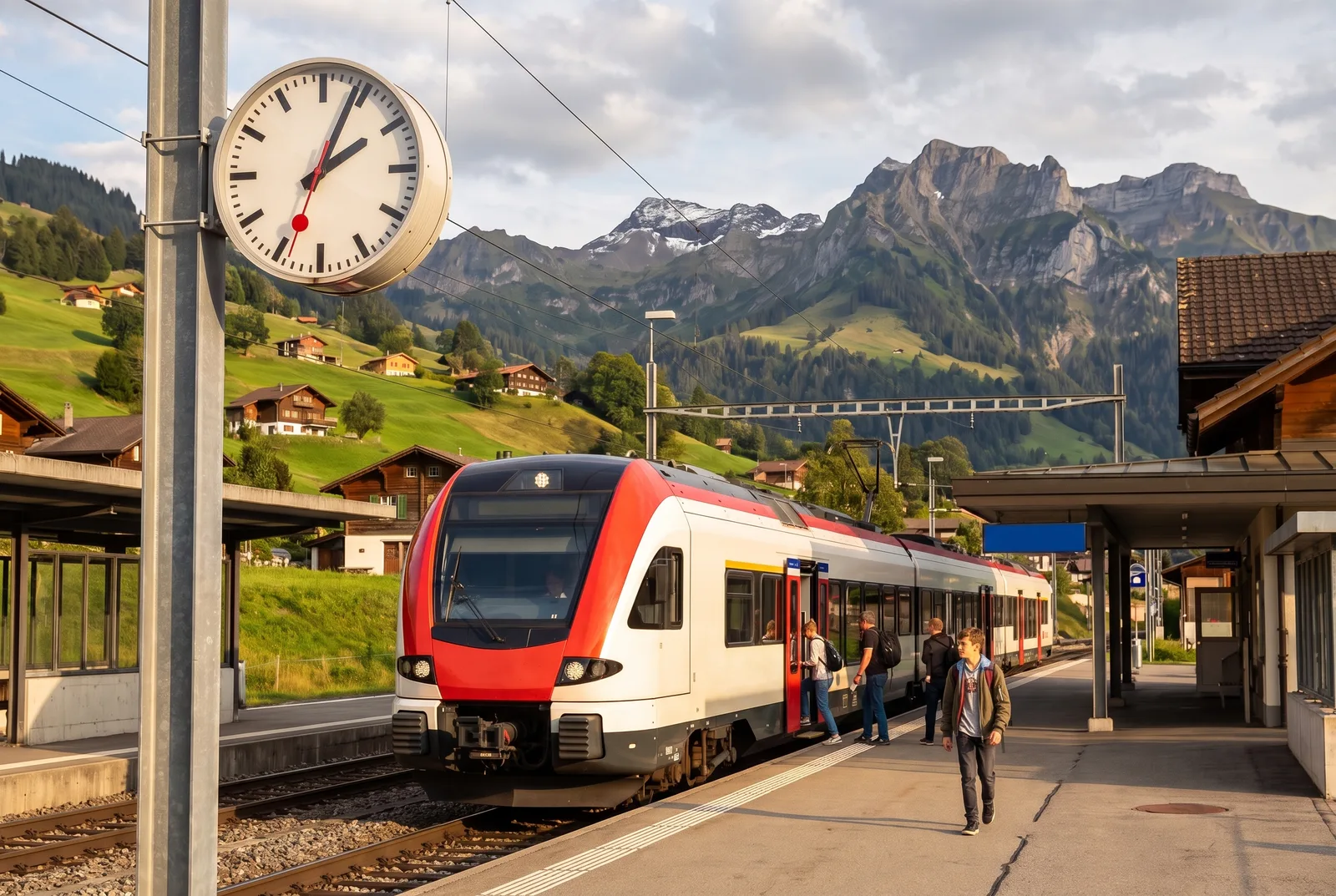
This might be one of the things I appreciate most about Switzerland. The train doesn't arrive "around" 08:14. No, it simply arrives at 08:14. And if it arrives at 08:15, it already feels like something's wrong. As a Dutch person I really had to get used to that. In the Netherlands you automatically factor in some delay. Here you genuinely plan to the minute. The funny thing is: after a while you get used to it and suddenly find yourself annoyed at a 3-minute delay, whereas you used to think: fine, could be worse.
3. Taking out the rubbish on exactly the right day
Waste is almost a project in itself in Switzerland. There are special bags, rules for glass, paper, cardboard and green waste, and in many municipalities you can't just put your rubbish out on any day. You need to know exactly which day the collection happens, where the bag is allowed to stand and what time you can put it out. At first this felt ridiculously organised. I understand it better now, but sometimes I still think: in the Netherlands I just threw this in the container and that was that.
4. TWINT works absolutely everywhere
This is something I may have got used to a little too quickly. TWINT is brilliant. You pay for your coffee with it, split a bill, pay at a mountain restaurant, at the market, send money to friends and sometimes even at a farm vending machine in some village. In the Netherlands I more often had to think: cash, debit card, Tikkie? Here it's usually just: TWINT. It's so handy that by now I'm almost surprised when something doesn't work with TWINT. There's a reason it tops pretty much every list of apps you really need in Switzerland.
5. Being able to head into the mountains after work
This might still be the most surreal one for me. You work a normal day as a physio, put on your hiking boots and an hour later you're standing on a mountain trail with a view of a lake, a valley or snow-capped peaks. In the Netherlands, "doing something after work" usually meant sports, a short walk or going out for dinner. Here it can suddenly mean a small hike, a swim in a lake or taking the train towards the mountains. You soon notice that even a full working week leaves plenty of room to discover Switzerland. Even after 5 years I still don't find this normal. And maybe it shouldn't become normal.
6. Everything arrives by post
Switzerland is modern, but at the same time very good at paper mail. Insurance, municipality, bank, official letters, contracts and invoices: a surprising amount still simply lands in your letterbox. In the Netherlands, much of this already felt digital. Here I sometimes get the impression that important things only become truly official once a letter about them arrives. It's part of life, but I still find it funny how Switzerland is super efficient on the one hand, and can feel very traditional on the other.
7. People plan far ahead
Spontaneous plans are possible, of course, but many Swiss like to plan things early. A hike, dinner, weekend away or even a simple get-together can be set weeks in advance. At first I found that a bit stiff. Now I understand it better, because everyone is busy, weekends fill up fast and many people are often outdoors or on the road. Still, I sometimes miss that Dutch "shall we just do something tonight?" feeling. On the other hand: if something is planned, it usually actually happens. Which, again, is very Swiss.
8. Quiet hours and rules in apartment buildings
If you live in Switzerland, you quickly learn that quiet is taken seriously. No washing machine on Sundays, not too much noise after a certain time and no DIY at odd moments. In some buildings the rules are almost a small book, especially if you share an apartment. At first I sometimes thought: does this really have to be so precise? But fair is fair: it also means living here is usually calm and tidy. Still, as a Dutch person, it sometimes takes getting used to that even planning your laundry is almost part of your integration.
Still getting used to it
It probably never fully stops. And that's fine. Some things stay typically Swiss, and that's exactly what makes living here such an adventure. We made the real beginner mistakes too, by the way: you can read them in the 10 mistakes from our first year in Switzerland.
Curious how other physios experience living and working in Switzerland? Have a look at the stories of physios who went before you.

Sign up on our platform and take the first step towards a job in Switzerland. Prefer to look around first? Browse the vacancies.
Sign up on our platform or book a free intro call. You will get an honest answer, even if Switzerland is not for you just yet.
Discover how takeoff connects you with motivated therapists from the Netherlands and Belgium.
Read more about Switzerland
Tips, tricks and more insights about living and working in this beautiful country
.jpg)